Watch order
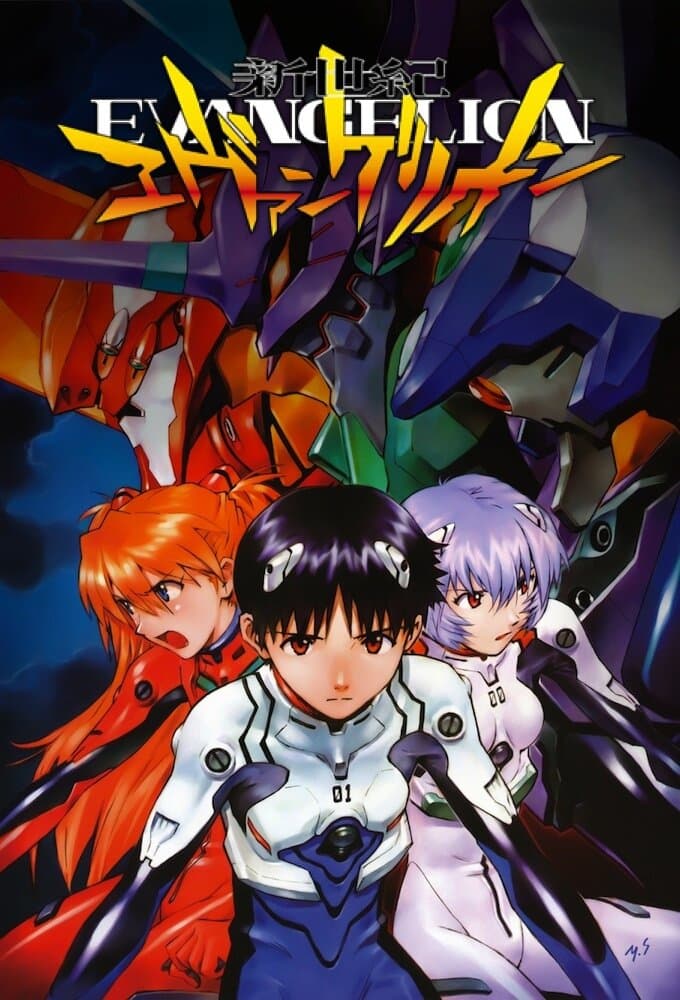
Evangelion watch order: TV series, End of Evangelion and Rebuild
Through Thrice Upon a TimeReviewed
Watch Neon Genesis Evangelion episodes 1–26 → The End of Evangelion → Rebuild 1.0 → 2.0 → 3.0 → 3.0+1.0. Keep the TV ending: the 1997 film is a second ending, not a replacement. Death & Rebirth is mostly recap and can wait until later.
Choose your route
Coverage & selection notes
A first-watch order for the 1995–96 TV series, the 1997 films and the four Rebuild of Evangelion films, reviewed October 21, 2026. Manga, games and spin-offs are outside this route. Plot outcomes of both endings are not described; streaming notes may not match every region.
Evangelion watch order for a first viewing
| Order | What to watch | How much |
|---|---|---|
| 1 | Neon Genesis Evangelion — TV series (1995–96) | Episodes 1–26, including the TV ending |
| 2 | The End of Evangelion (1997) | 1 film; watch after episode 26 |
| 3 | Evangelion: 1.0 You Are (Not) Alone (2007) | 1 film; also released as 1.11 |
| 4 | Evangelion: 2.0 You Can (Not) Advance (2009) | 1 film; also released as 2.22 |
| 5 | Evangelion: 3.0 You Can (Not) Redo (2012) | 1 film; also released as 3.33 |
| 6 | Evangelion: 3.0+1.0 Thrice Upon a Time (2021) | 1 film; also released as 3.0+1.01 |
Finish one row before moving to the next. The TV series and The End of Evangelion make up the original story; the four Rebuild films are a later, separate retelling, so start them only after the first two rows.
That is 26 TV episodes and five films. Some releases number the Rebuild films 1.11, 2.22, 3.33 and 3.0+1.01: these are later editions of the same four films, not extra entries. Watch one edition of each.
Episodes 25–26 or The End of Evangelion?
Watch both, TV ending first. The End of Evangelion was made as a new version of the series’ last two episodes and presented as an alternative ending. It does not replace episodes 25–26, and those episodes do not make the film redundant: the two approach the same closing stretch differently.
The usual recommendation, and ours, is episodes 1–26 in broadcast order, then the film. Some guides suggest stopping after episode 24, watching the film, then returning to 25–26. That can be an interesting rewatch, but on a first viewing it moves the TV ending out of the place it was made for.
Do not start with the film. It picks up from the late TV episodes and assumes you know the whole series; it is not a standalone movie.
Should I watch Death & Rebirth?
Not on a first watch. Death & Rebirth, released in Japan in March 1997, has two parts. Death is a roughly 70-minute re-edit of footage from episodes 1–24, with some redrawn shots and new linking scenes. Rebirth, under half an hour long, is new animation that became an early, unfinished version of the opening part of The End of Evangelion, which followed four months later.
In practice, Death recaps episodes you have just watched and Rebirth is superseded by the finished film. If you watch The End of Evangelion, leaving Death & Rebirth out does not cost you a story chapter.
On streaming you are more likely to see Evangelion: Death (True)², a later re-edit of the Death half only. Revival of Evangelion (1998) packaged that re-edit with the finished End of Evangelion. Treat Death (True)² as an optional extra after the series, never as a shortcut in place of the TV episodes.
Director’s cut or broadcast episodes 21–24?
Episodes 21–24 exist in two versions: as broadcast in 1996, and in longer cuts made for the Japanese home-video release. The longer versions add scenes, between about two and six minutes per episode, and some of that footage was first seen in Death. English-language releases usually call them the director’s cut; fans sometimes write them as 21′–24′.
Either version is fine for a first watch. The extended cuts lengthen the same four episodes rather than adding new ones, so pick one version of each and keep going. There is no need to watch both versions back to back unless you want to compare them.
Fan reports and several watch guides say the 2019 Netflix release uses the longer cuts; Netflix does not label them. ADV’s Platinum Edition DVDs, released in the US in 2004–05, included both versions of all four episodes.
Is Rebuild a remake or a sequel?
Rebuild of Evangelion begins as a retelling. The first film follows the TV series’ opening episodes very closely; the second covers later events more loosely and adds new material; from the third film the story goes its own way. Whether it also connects to the original continuity is a long-running fan debate, and you do not need an answer to follow the films.
Can you start with Rebuild? The films were intended to work for newcomers, and 1.0 stands on its own. We still recommend the original first. The later films deliberately play against what the TV series and The End of Evangelion did, and much of their effect depends on noticing those differences. Starting with Rebuild would also make your first TV episodes a repeat of events you had just seen.
Watch the four films in release order. The updated editions are revisions of the same films; they do not add a fifth chapter.
Is there a new Evangelion series?
Announced, not released. Studio Khara and CloverWorks revealed a new Evangelion series on February 23, 2026, at the close of the franchise’s 30th-anniversary festival in Yokohama. Kazuya Tsurumaki and Tōko Yatabe are directing, with scripts by Yoko Taro.
No release date or platform had been announced when this guide was reviewed, so it is not in the order table. It has been presented as an all-new work, and its relationship to earlier entries has not been explained. It does not change what to watch now.
Separately, a short made for the anniversary festival was posted on Studio Khara’s YouTube channel in March 2026. It draws on both the TV series and the Rebuild films, so save it until after Thrice Upon a Time.
Which version will I find on streaming?
Netflix began streaming the TV series, Evangelion: Death (True)² and The End of Evangelion in 2019, with a new English translation and dub. The same three titles joined the Criterion Channel, which streams in the US and Canada, on September 1, 2026, where the series is offered in Japanese or with its original 1990s English dub.
The Rebuild films arrived on Prime Video outside Japan in August 2021, as 1.11, 2.22, 3.33 and 3.0+1.01. Prime Video listed all four as leaving on August 13, 2026, and later reports say they were removed then. We found no announced new streaming home for them when reviewing this guide, so buying them digitally or on disc may be the only option where you live.
This is viewing-order advice, not a promise that every entry is included with one subscription. Catalogues differ by country, so check the actual title, version and audio options in your service before planning a viewing session.
Keep exploring
 Watch order
SG-1, Atlantis & the films
Season-block order Watch order
Shows & crossover checkpoints
Major crossover guide Watch order
The Last Airbender → Korra
Both original cartoons Filler list
Naruto & Shippuden skip ranges
220 + 500 episodes Filler list
Keep the story, skip optional arcs
Original episodes 1–366 Filler list
Optional filler through Wano
Through episode 1085 Watch order
Complete chronological episode order
133 episodes + the film Watch order
Original series & the follow-ups
Four-series viewing guide Watch order
Where to start & which spin-off next
Original series + six spin-offs Filler list
Optional filler, training episodes and the film
Original episodes 1–170 Watch order
Choose Mugen Train once, then follow the arcs
Through the first Infinity Castle film Watch order
Choose Z or Kai, then follow the next story
Core series, Daima and modern film choices Combined watch order
Know exactly when to switch between the two shows
144 Buffy + 110 Angel episodes Filler list
Optional filler, anime-canon arcs and the film
Episodes 1–293 Watch order
Netflix seasons, Defenders & Born Again
Through Born Again season 2 and One Last Kill Watch order
Release order, and where Kizumonogatari goes
Through Off & Monster Season